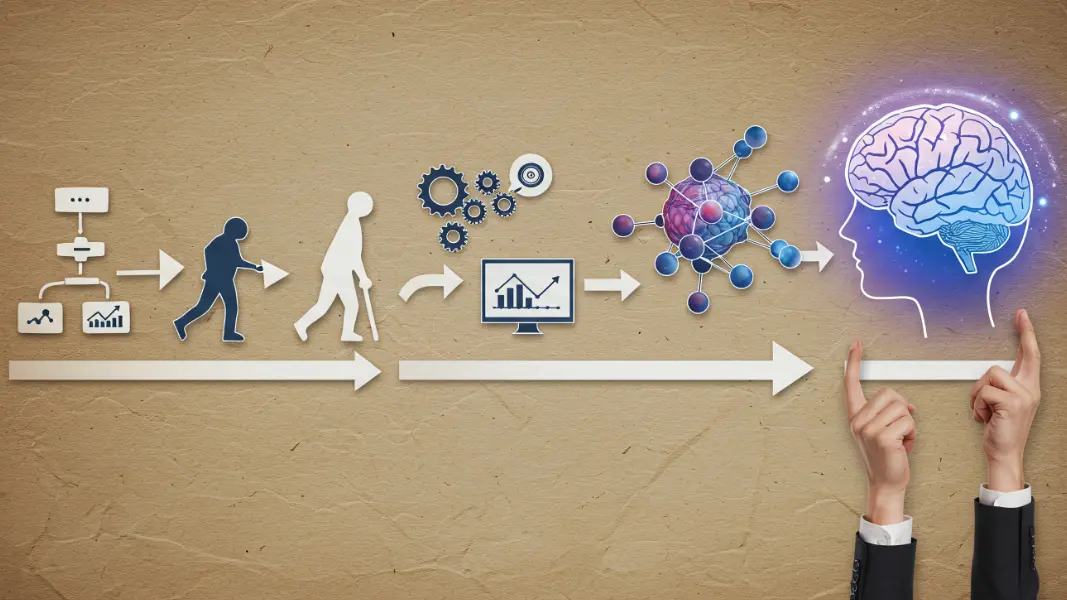
Artificial Intelligence (AI) is rapidly redefining the rules of digital marketing. The way brands connect with their audiences now is totally transformed. Why so? Because we are now operating in an AI-first search ecosystem. Traditional SEO tactics focused solely on keywords and rankings. This approach is no longer enough. After all, search engines and AI-powered platforms now prioritize context, intent, and direct answers. Here is all you need to know how AI is changing the course of digital marketing.
Key Takeaways!
- Traditional SEO is not enough anymore. Brands should focus on catering to user queries and needs.
- Focus on meaning, topic clusters, structured data, and AI-readable content to boost authority and visibility.
- Direct-answer optimization and creating content recognized by LLMs ensures brand presence in AI-powered searches.
- Marketers should combine strategy, creativity, and oversight with AI automation, predictive analytics, and generative tools for effective campaigns.
What AI trends are redefining digital marketing?
AI is reshaping digital marketing with highly efficient tools and strategies. After all, there are a lot of new technologies such as hyper-personalization, generative AI, conversational interfaces, predictive analytics, and immersive AR/VR. This is totally changing how brands attract and retain audiences.
- Hyper-Personalization: AI processes large volumes of user data to deliver highly customized content, offers, and recommendations based on individual behavior.
- Generative AI for Content Creation: Advanced AI tools can quickly produce high-quality text, visuals, videos, and summaries.
- Predictive Analytics and Audience Targeting: By analyzing historical and real-time data, AI predicts consumer behavior. This enables accurate targeting, optimized ad spending, and improved campaign ROI.
- Conversational AI and Voice Search: AI-powered chatbots and voice-enabled search experiences allow users to interact naturally with brands.
- Immersive AR/VR Experiences: AI-enhanced augmented and virtual reality enables interactive experiences such as virtual product try-ons and 3D demos.
- Automated SEO and Content Optimization: AI tools analyze search trends, user intent, and keywords to optimize content more effectively, helping brands stay competitive in evolving search environments.
- Emotion-Aware Marketing Content: AI can interpret user sentiment and emotional cues, adapting messaging to create stronger emotional connections and more impactful campaigns.
- Ethical AI and Data Transparency: As AI adoption grows, brands are prioritizing responsible data usage and transparency to build trust. Hence, AI becomes an ethical key differentiator.
- Strategic Human–AI Collaboration: Marketers are increasingly focusing on strategy, creativity, and oversight. On the other hand, AI handles automation and data analysis.
This doesn’t at all mean that you’d replace humans with some technology. Instead, SEO agencies now focus toward human–AI collaboration. There should be a system where both can engage strategically.
What are some common AI tools for digital marketing?
With AI, traditional keyword-based ranking is evolving into intent-based, context-aware, and conversational search experiences. This is powered by:
- Google Search Generative Experience (SGE)
- Bing AI & Copilot
- ChatGPT, Claude, Gemini
- Voice assistants like Alexa and Siri
Different Ways to Keep Up with AI Trends in Digital Marketing
The right way to stay aligned with the AI driven changes in digital marketing is to adapt to the new SEO approaches. Let’s talk about some of them:
What is Semantic SEO?
Semantic SEO is a modern SEO technique that optimizes content for the meaning and context behind search queries. It aligns with user intent and helps search engines understand the topic to deliver more relevant results.
Key Principles of Semantic SEO:
- Focus on User Intent: Understand why users search and provide content that satisfies their needs.
- Topic Clusters: Interlink pillar pages and supporting articles to show topic depth.
- Entity Recognition: Highlight people, places, and concepts, and their relationships.
- Natural Language Processing (NLP): Use clear, natural language that mirrors user queries.
- Structured Data (Schema Markup): Add code to help search engines understand content meaning.
For expert implementation, professional SEO services can ensure your site leverages Semantic SEO effectively. New methods of optimization like AIO, AEO, and LLM seeding are all branches of semantic SEO.
Did you know?
In the past 2 – 3 years, Google has deindexed millions of websites because of spammy, low-quality content.
What Is AEO (Answer Engine Optimization)?
Answer Engine Optimization (AEO) focuses on optimizing content to directly answer user questions across AI-powered platforms, voice search, and featured snippets. AEO ensures your content is chosen as the authoritative response and brand authority in LLM search experiences.
What is the difference between SEO and AEO?
Answer Engine Optimization (AEO) focuses on optimizing content to cater to user search queries. For this, it targets AI-powered platforms, voice search, and featured snippets. Meanwhile, traditional SEO just targets rankings. And it uses outdated methods like just keyword integration.
| SEO | AEO |
| Optimizes for rankings | Optimizes for answers |
| Keyword focused | Question & intent focused |
| Page traffic driven | Visibility & authority driven |
What are Some Efficient SEO Practices?
Old ways like conventional keyword research or endlessly creating webpages won’t work these days. Here are some highly workable AEO strategies that can keep you ahead.
- Use question-based headings (Who, What, Why, How)
- Provide direct answers in the first 40–60 words
- Create FAQ sections
- Optimize for voice search
- Use natural, conversational language
What Is AIO (Artificial Intelligence Optimization)?
Artificial Intelligence Optimization (AIO) refers to optimizing digital content so that AI systems can easily understand, extract, and present it in generated responses.
Why does AIO matter?
AIO helps content become easily understood, trusted, and used by AI systems that generate search results and answers. AI-powered platforms are gradually replacing traditional search behavior. AIO ensures your brand remains visible, authoritative, and accurately represented within AI-driven responses and recommendations.
What are some practical AIO Strategies?
To succeed in an AI-driven search landscape, brands must optimize content specifically for AI systems. Here are some practical and effective AIO (Artificial Intelligence Optimization) strategies:
- Structure Content Clearly: Use descriptive headings, subheadings, bullet points, and short paragraphs. Well-structured content helps AI models quickly identify key ideas and extract accurate information.
- Write for Clarity and Accuracy: Focus on fact-based, precise explanations. Avoid fluff and ambiguity so AI tools can confidently reference your content in generated answers.
- Optimize for Topical Authority
Cover topics comprehensively instead of targeting isolated keywords. Creating a detailed content cluster signals expertise and increases trustworthiness for AI systems. - Use Schema Markup: Implement structured data such as FAQ, How-To, Article, and Organization schema to help AI and search engines understand context and intent.
- Answer Questions Directly: Include concise, direct answers within the first few sentences, especially for common “what,” “why,” and “how” queries.
- Maintain Consistent Brand Signals: Make sure to use consistent brand names, terminology, and messaging across your website and external platforms to improve AI recognition and attribution.
- Keep Content Fresh and Updated: Regularly update content with current information, statistics, and examples, as AI systems favor up-to-date and reliable sources.
By applying these AIO strategies, businesses increase their chances of being selected, summarized, and recommended by AI-powered search engines and generative platforms.
What Is LLM Seeding?
LLM Seeding is the process of creating content so Large Language Models or LLMs can recognize and cite the content in their AI-generated answers. This is a modern marketing strategy that helps build brand authority and passive visibility beyond traditional clicks and SEO.
Why is LLM Seeding Important?
As you see, more people are now relying on AI models like ChatGPT and Gemini, etc. Google is still at top of the game but AI models are also competing for the crown. This is why LLM seeding is important. It allows you to get seen by LLM tools and eventually by your target audience.
For example, a user goes up to ChatGPT and searches for “best jackets in USA.” ChatGPT will process your query and generate a list of top-rated jackets based on factors like quality, popularity, reviews, and brand reputation. If you sell jackets and your site is credible enough, it will cite you in the results too.
How to Rank your Website in LLMs?
The key is to create authoritative, high-quality content if you want to rank your website in LLMs. Use structured data, maintain consistent brand mentions across trusted sources, and publish informative resources on reputable platforms.
Did you know?
LLMs are trained on vast public datasets, including blogs, forums, news articles, knowledge bases, product documentation.
LLM Seeding Techniques
Want your website to appear in ChatGPT or Gemini searches? Here are some proven techniques you can follow to do so:
- Publish Authoritative Content on High-Trust Platforms
- Maintain Consistent Brand Mentions Across the Web
- Create Educational Resources and Guides
- Get Cited in Reputable Publications
- Optimize Wikipedia, Wikidata, and Knowledge Graphs
LLM seeding is the modern form of brand awareness for AI search. In a few more days, you may see LLM tools even dominating Google. This is why keeping up with these strategies is important.
Conclusion
AI is changing everything, including digital marketing. Putting up content on your website endlessly won’t get you seen anymore. You need an advanced strategy. Techniques like Semantic SEO, AIO, AEO, and LLM seeding allow brands to remain visible in AI-powered search ecosystems. You have to stay hyper-personalization, predictive analytics, generative content, and immersive experiences. This way marketers and SEO specialists can deliver more engaging, efficient, and data-driven campaigns. Success in this AI-first era requires a balance of AI and human creativity.